Cryptorobotic: from zero to 140K traders in eight years
Three decisions shaped the platform most: renewing the interface, getting a newcomer to a first result, and moving the key flows onto the phone. Each one was checked against the data
From the first sketches to launch, retention and mobile use
Eight years of continuous product work
A safe way into the product, without taking anything from professionals
Conversion to subscription after the new onboarding
As the feature set grows, a newcomer gets lost
The product is a trading and automation platform with a wide range of tools, scenarios and settings. Every year it gained capability, and every year the first hour got harder. The goal was never to simplify the product. It was to make the way in obvious
- New users could not tell where to begin, the tools were there, the first step was not
- Starting a bot exposed newcomers to real-money risk and complex settings at the same time
- After four years the original interface had aged: a dense grid with weak visual hierarchy
- Almost half of the traffic was already mobile, on flows built for a desktop
- The depth: professionals were using the advanced settings daily
- The product foundation: features and decisions that had already proven themselves
- Trust. This is real money, and every screen has to feel safe
- Release pace: the platform could not stop while it was being rebuilt
Renew the interface. Keep the depth
The product logic had proved itself over four years; the way it was presented no longer matched. We rebuilt structure, interface response and visual language around the existing workflows instead of making professionals relearn the platform
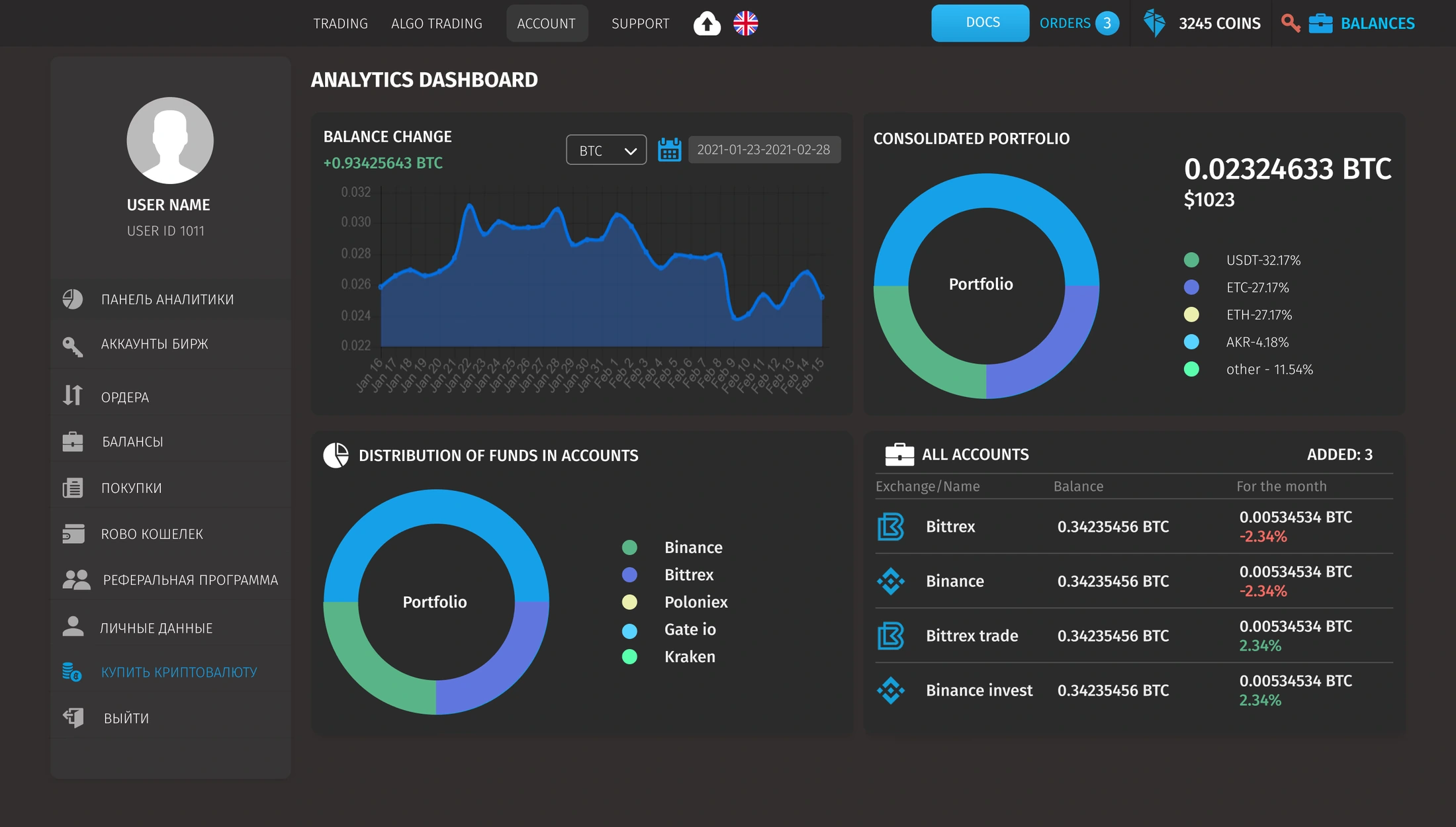
Weak hierarchy and equal visual weight made daily checks slow. Every number was present, but nothing led
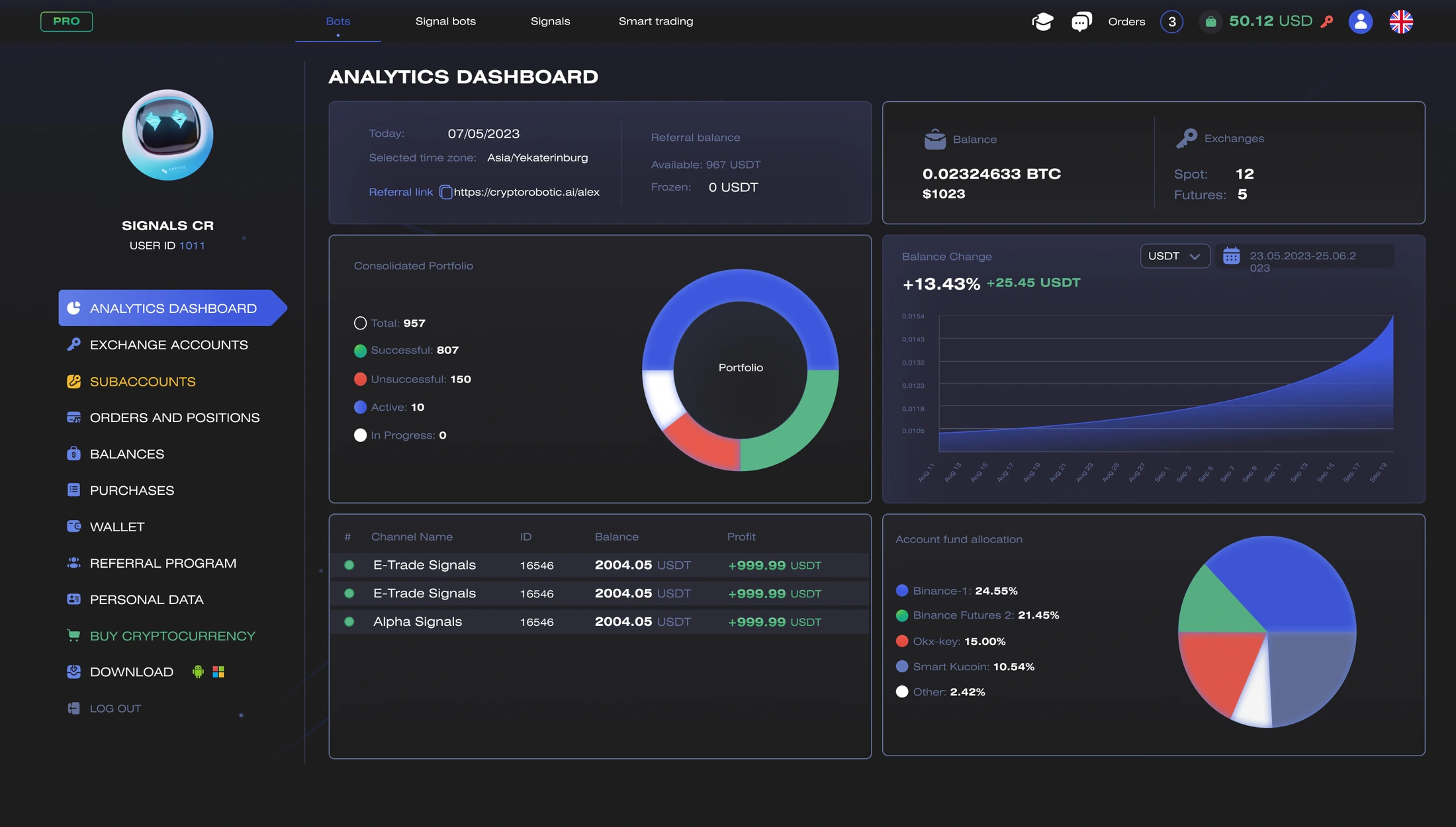
A clearer hierarchy made daily checks fast. Portfolio, balance and account split each gained a clear role
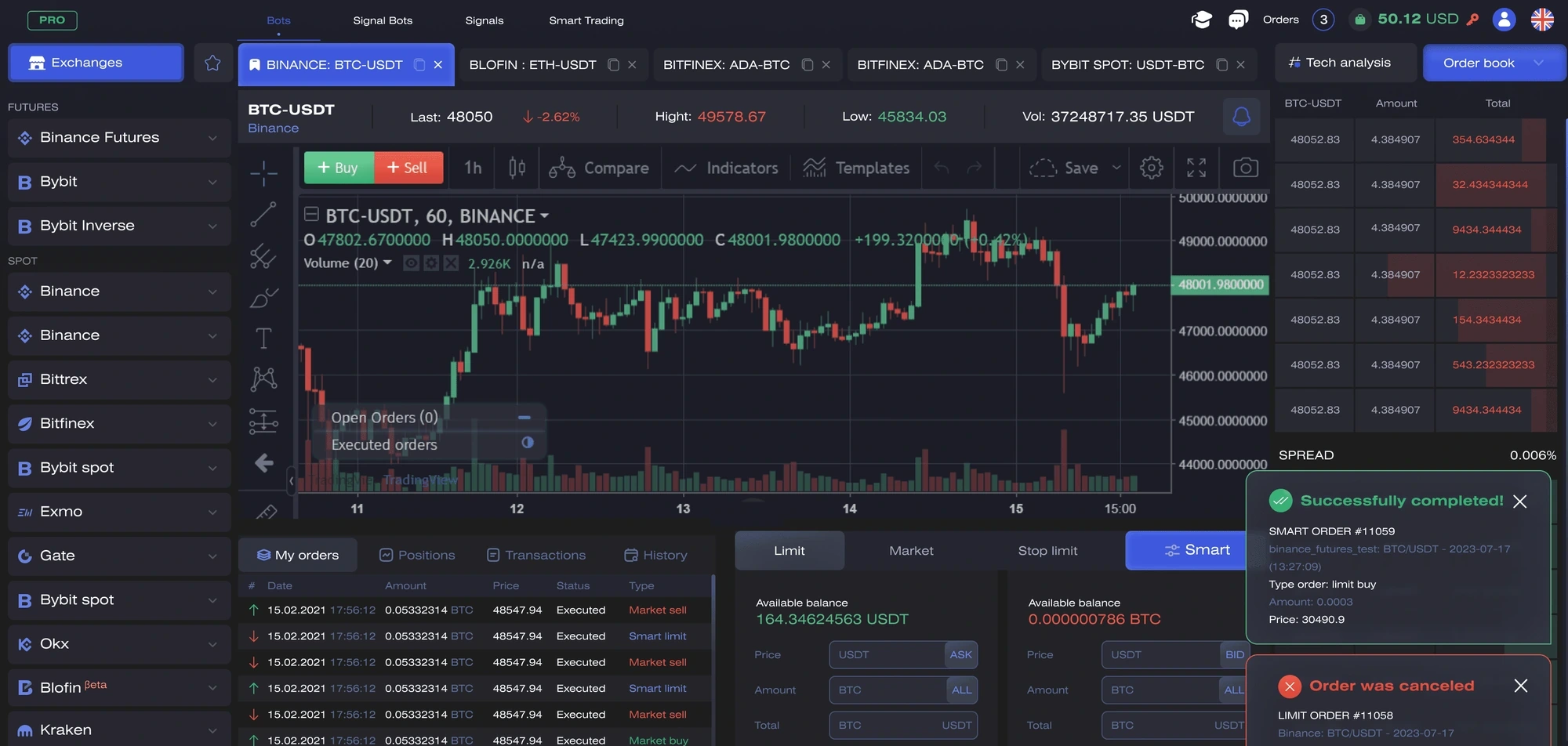
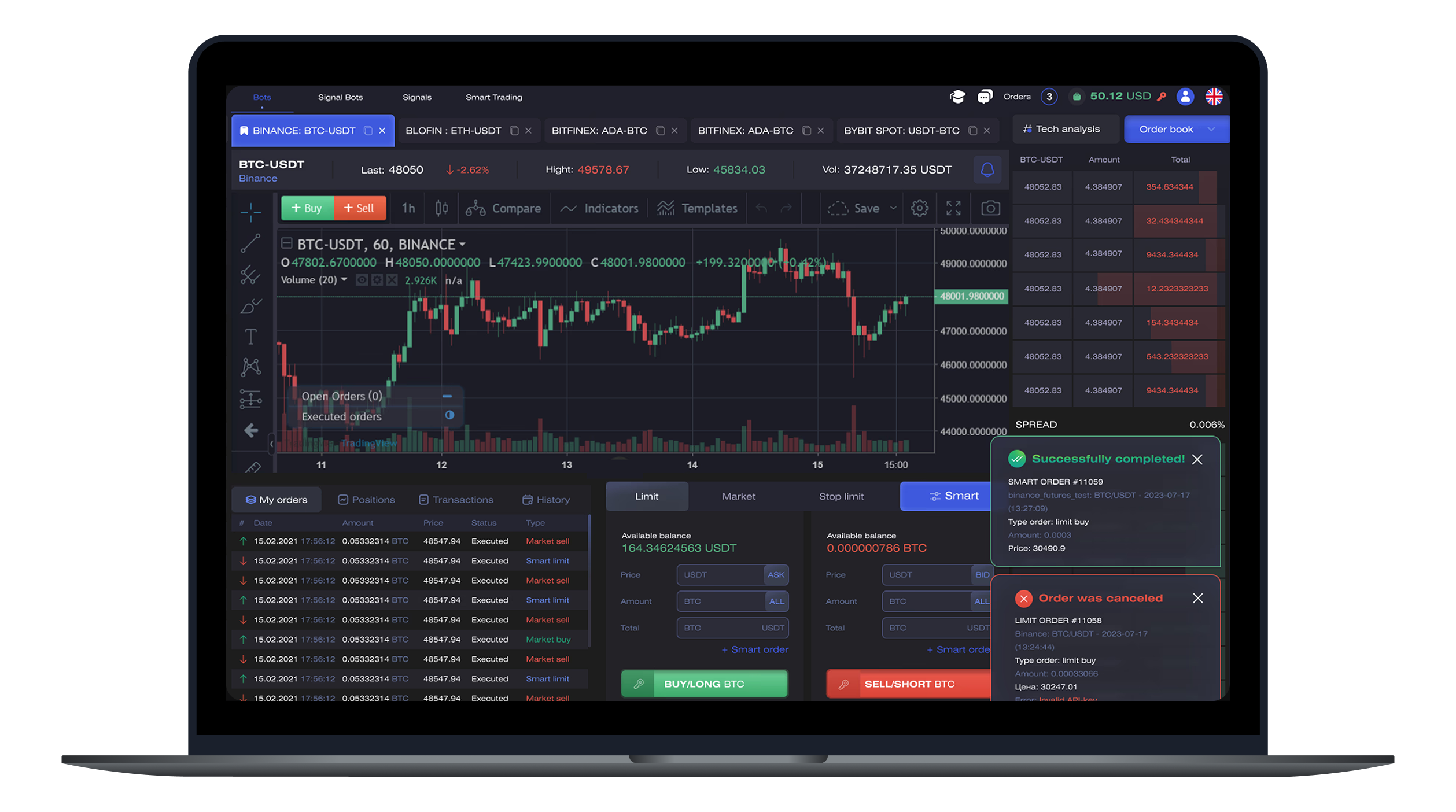
The chart leads, the order panel stays within reach, and the exchange list no longer distracts. Not one feature disappeared, only the visual priority changed
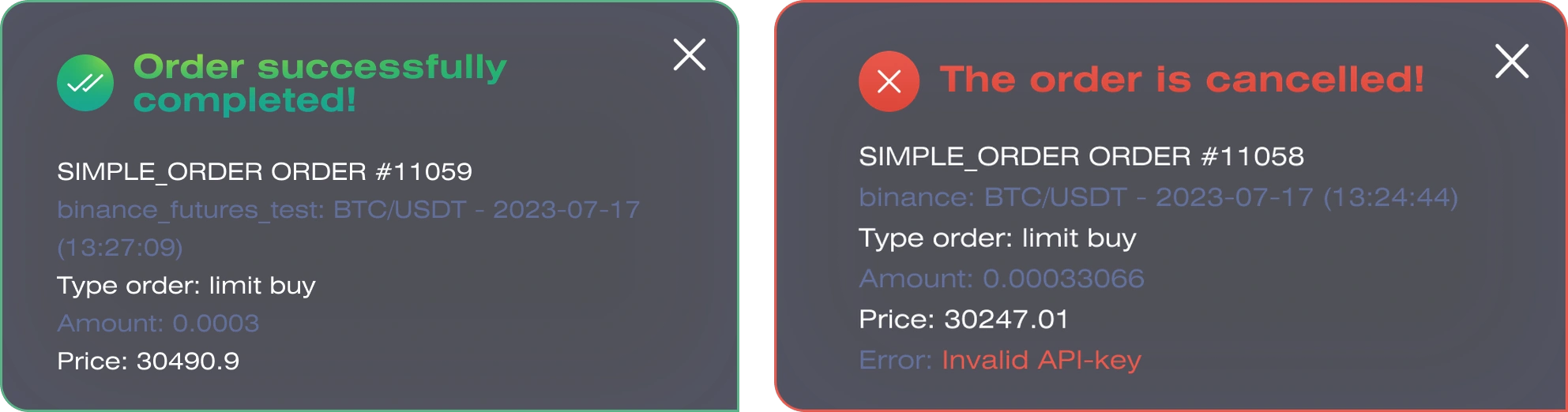
Success and failure share one structure. When an order fails, the message names the cause at the moment it happens
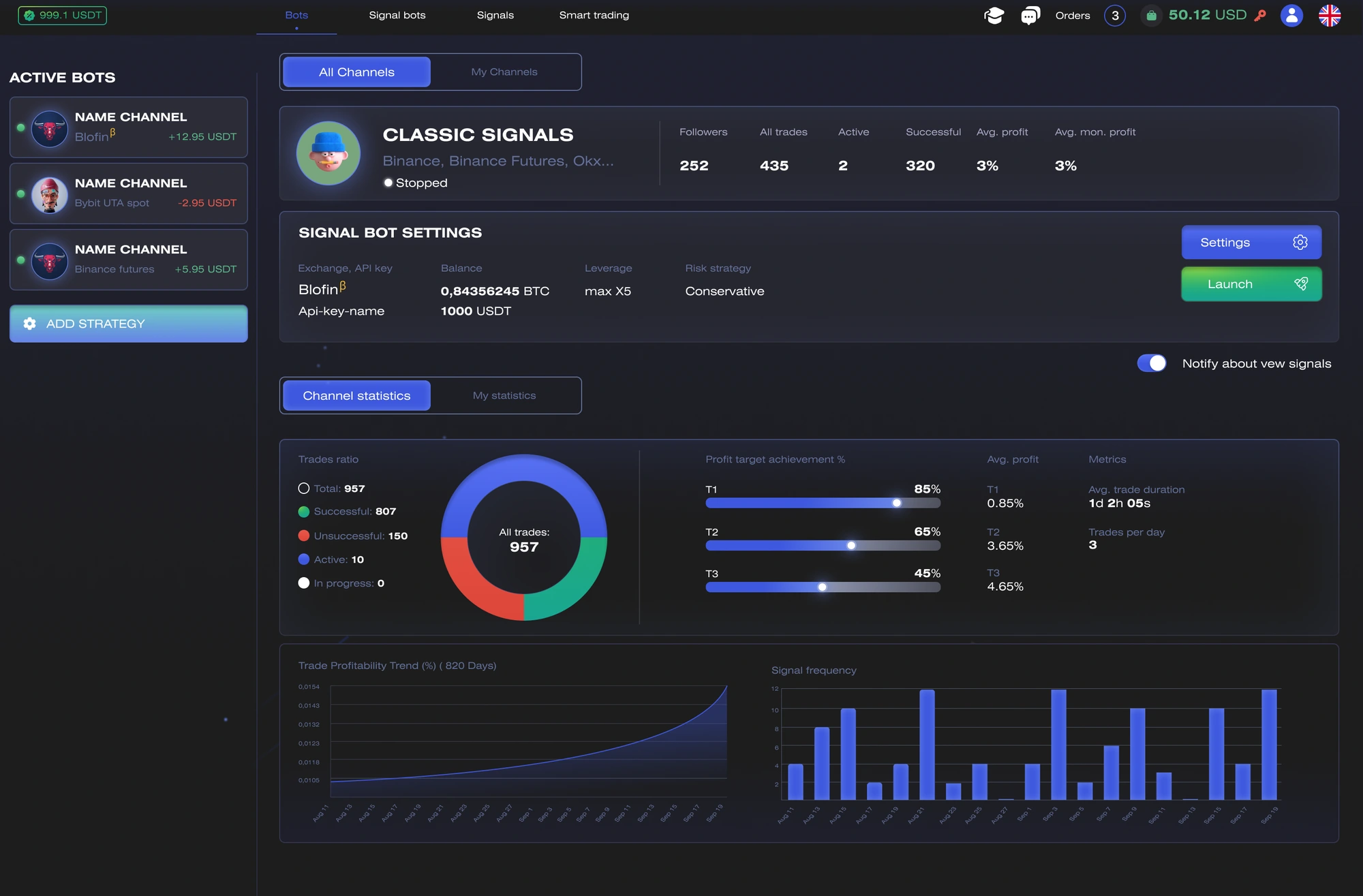
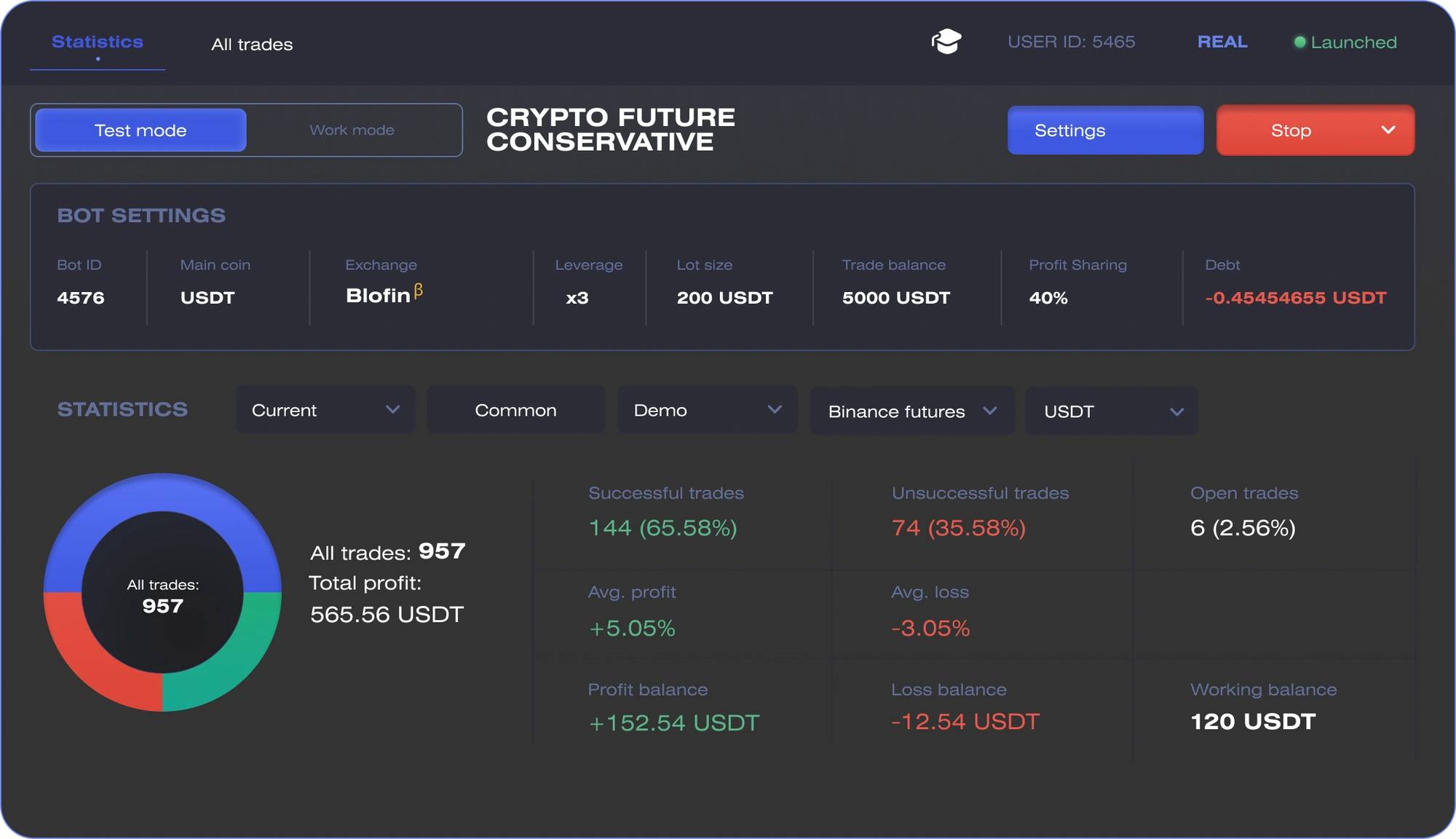
Advanced statistics stay available without competing with the first decision. Newcomers get an entrance; professionals keep the evidence they use every day
Prove the value before offering a subscription
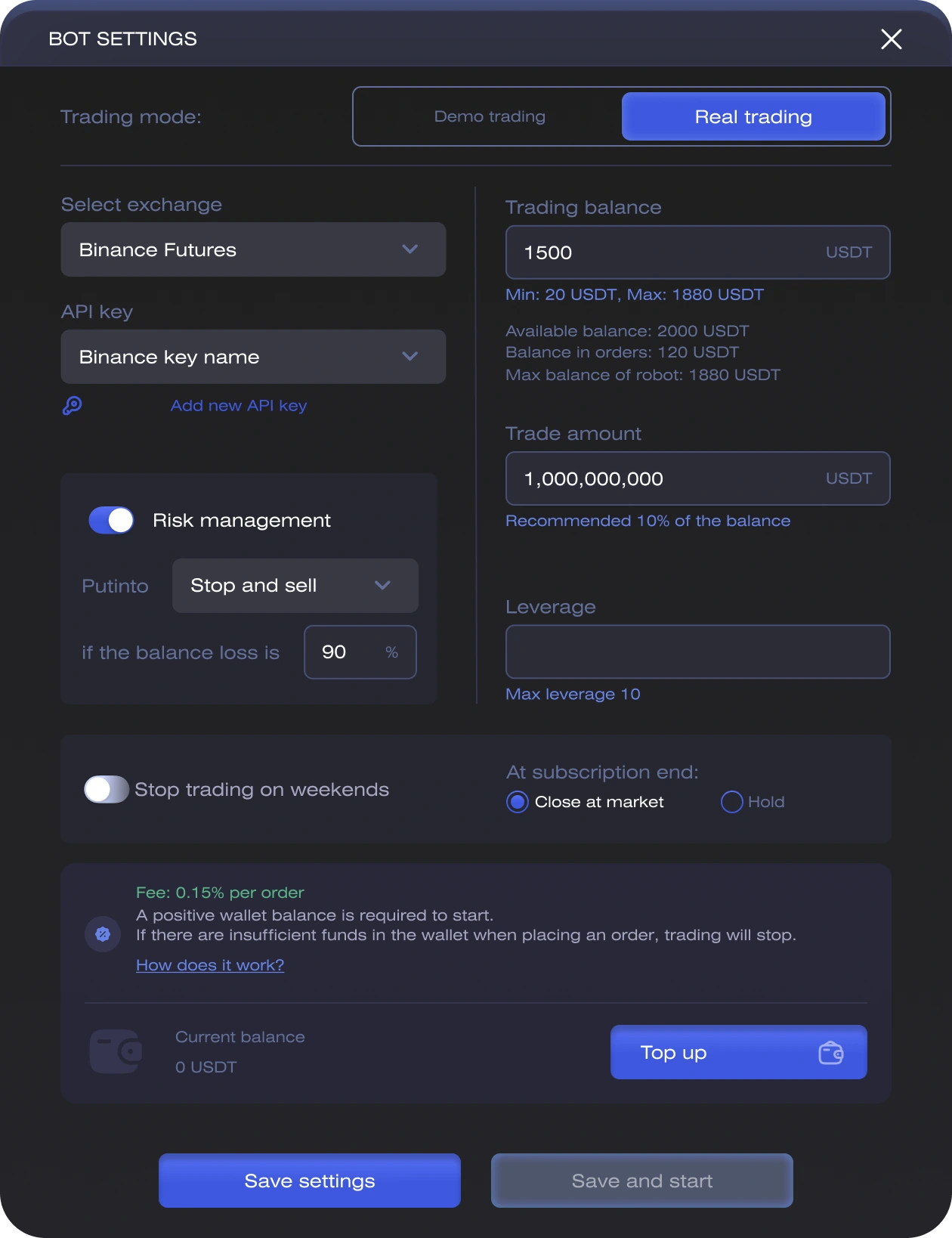
A newcomer no longer starts by connecting an exchange and facing a wall of settings. Right after sign-up, a three-step flow launches a real bot on a virtual balance, one safe decision at a time
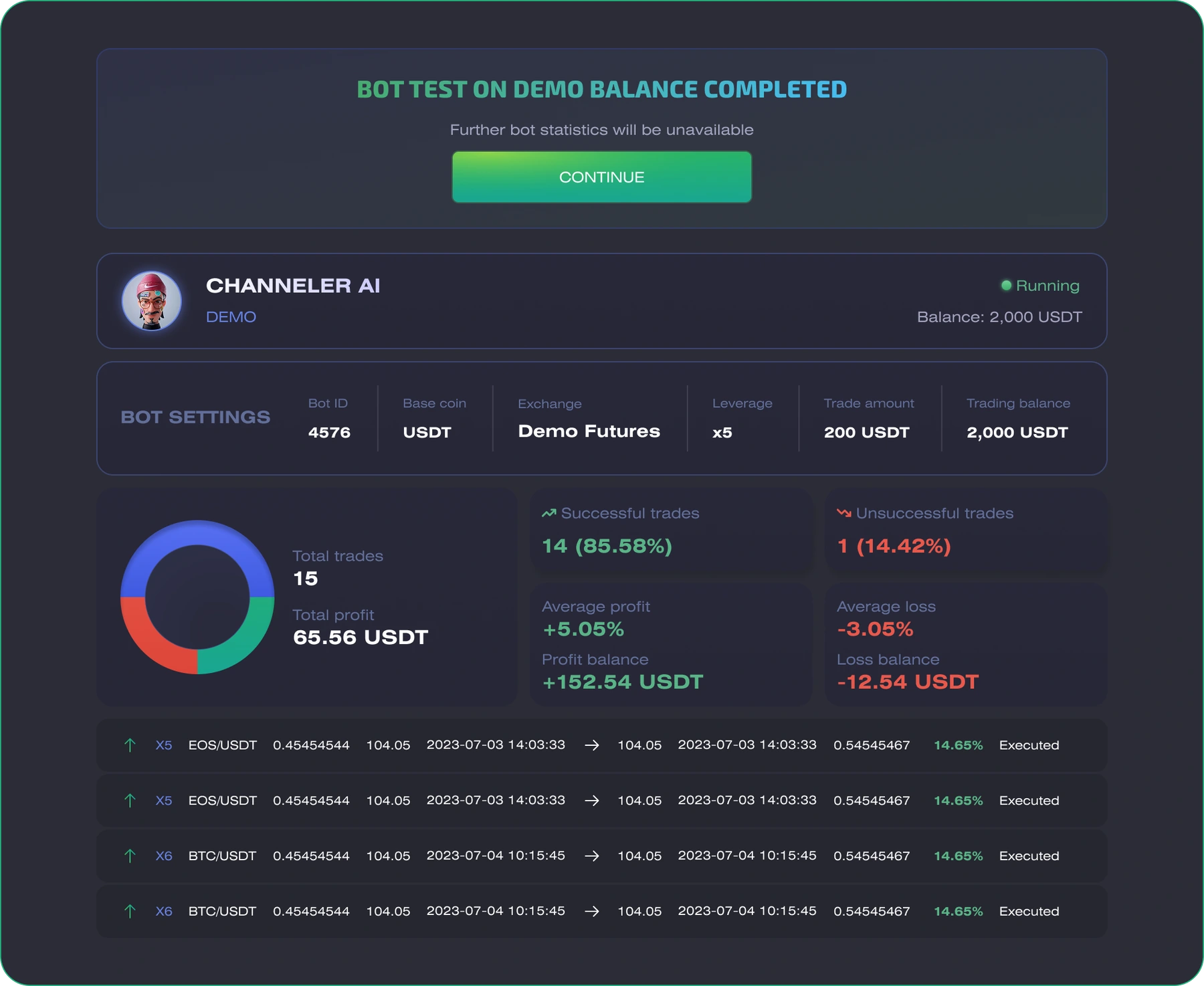
Add a demo balance of 10,000 USDT. Choose how much of it the bot may use. Watch it trade. Each step asks one question and explains why it is asking, and the advice sits inside the flow, not in a help article somewhere else. The point was never to teach the platform; it was to get a person to a working bot before they decide the product is too complex
A demo balance, labelled plainly as virtual. The first action carries no financial risk
The amount, and nothing else. Advanced settings stay available but stop getting in the way
The bot is already trading. Live statistics convince better than any promise
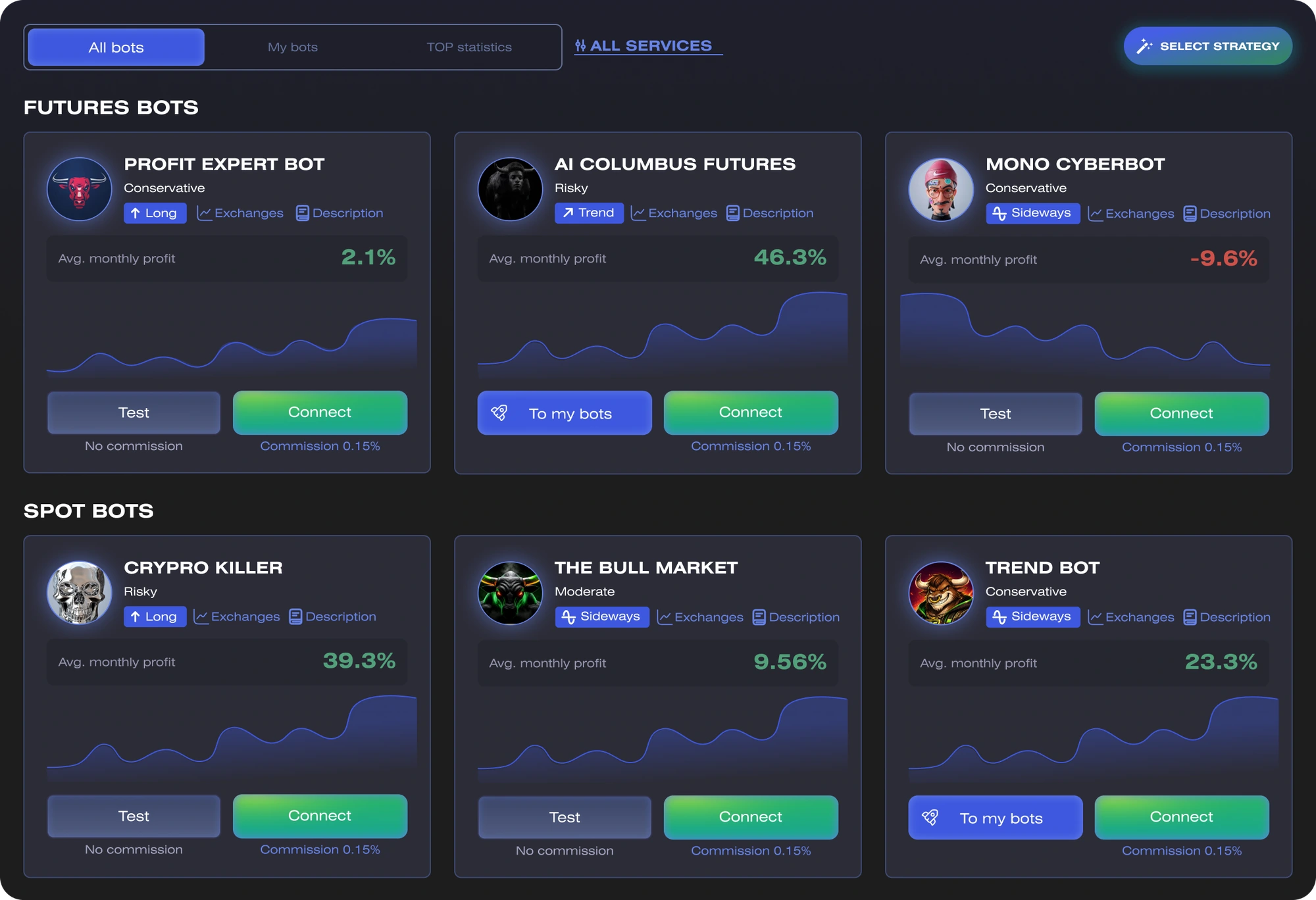
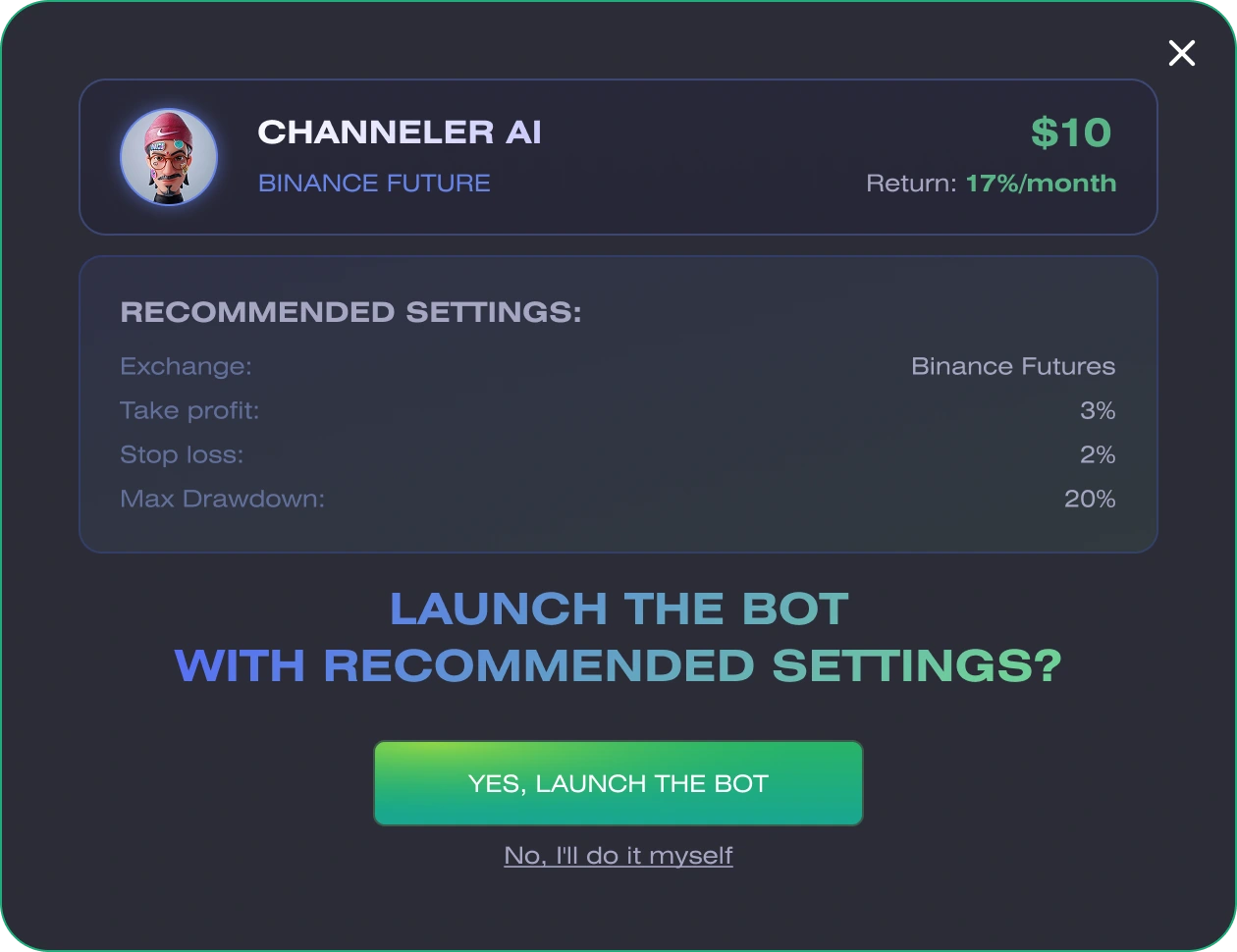
fewer support requests about launch problems
Reported metric · Bots launch flow
Idea to tested implementation: 7 working days
Move the key flows onto the phone
A shorter registration, security given its own room, and trading and bot monitoring rebuilt for one thumb
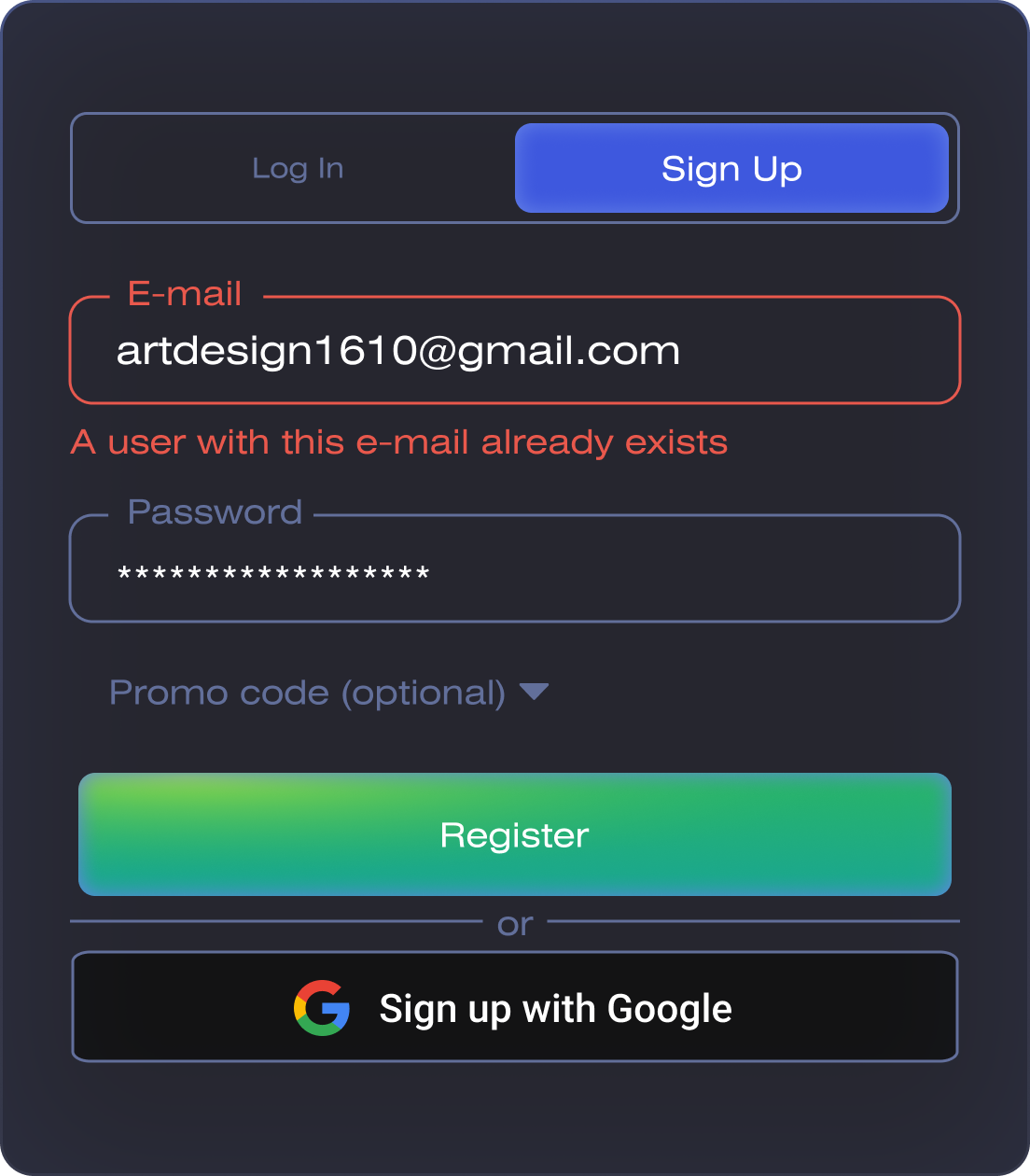
Errors are shown before the button is pressed, and Google sign-in is there as an alternative
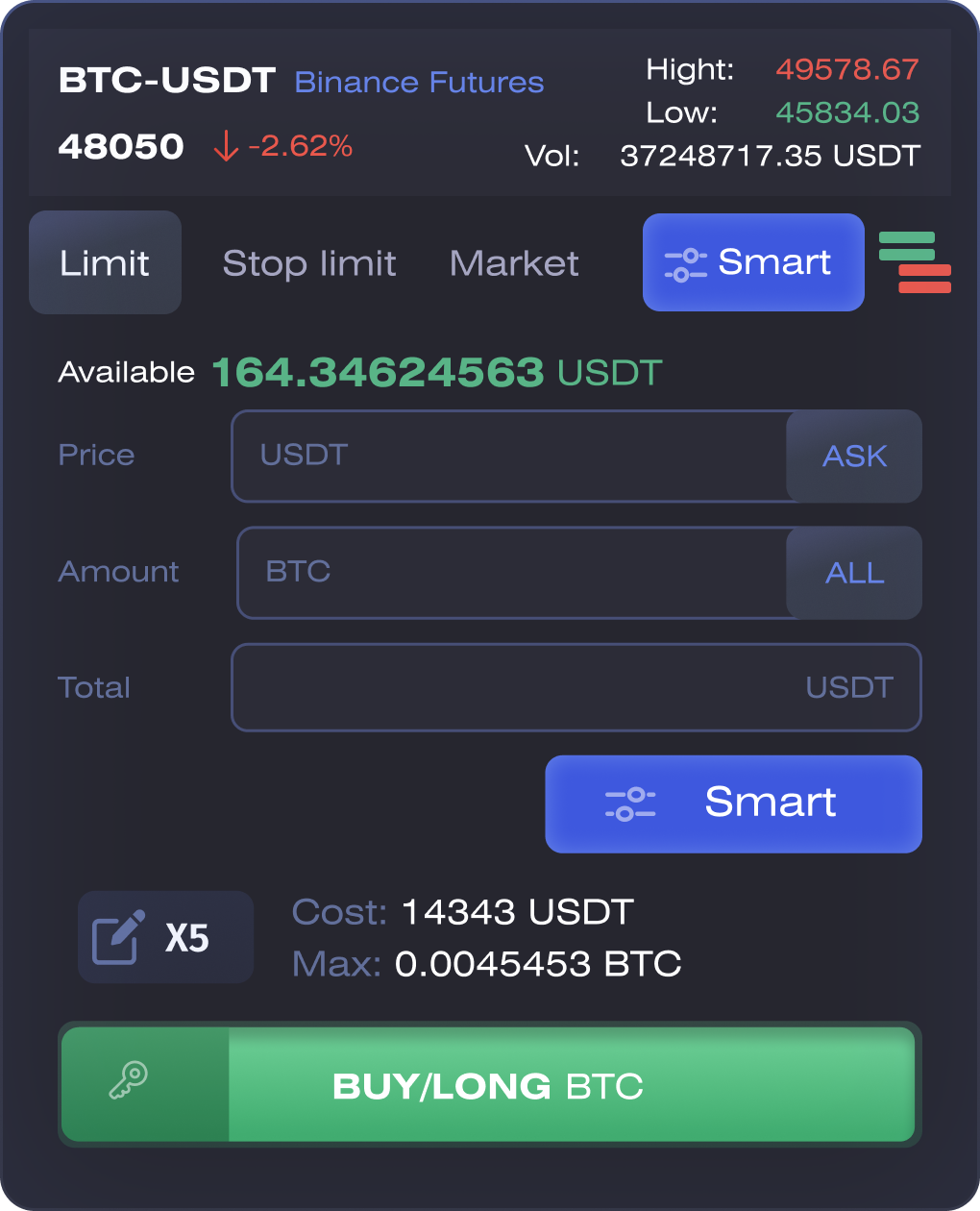
Order type, amount and leverage stack in the order the decision is actually made, with the action pinned where the thumb already rests
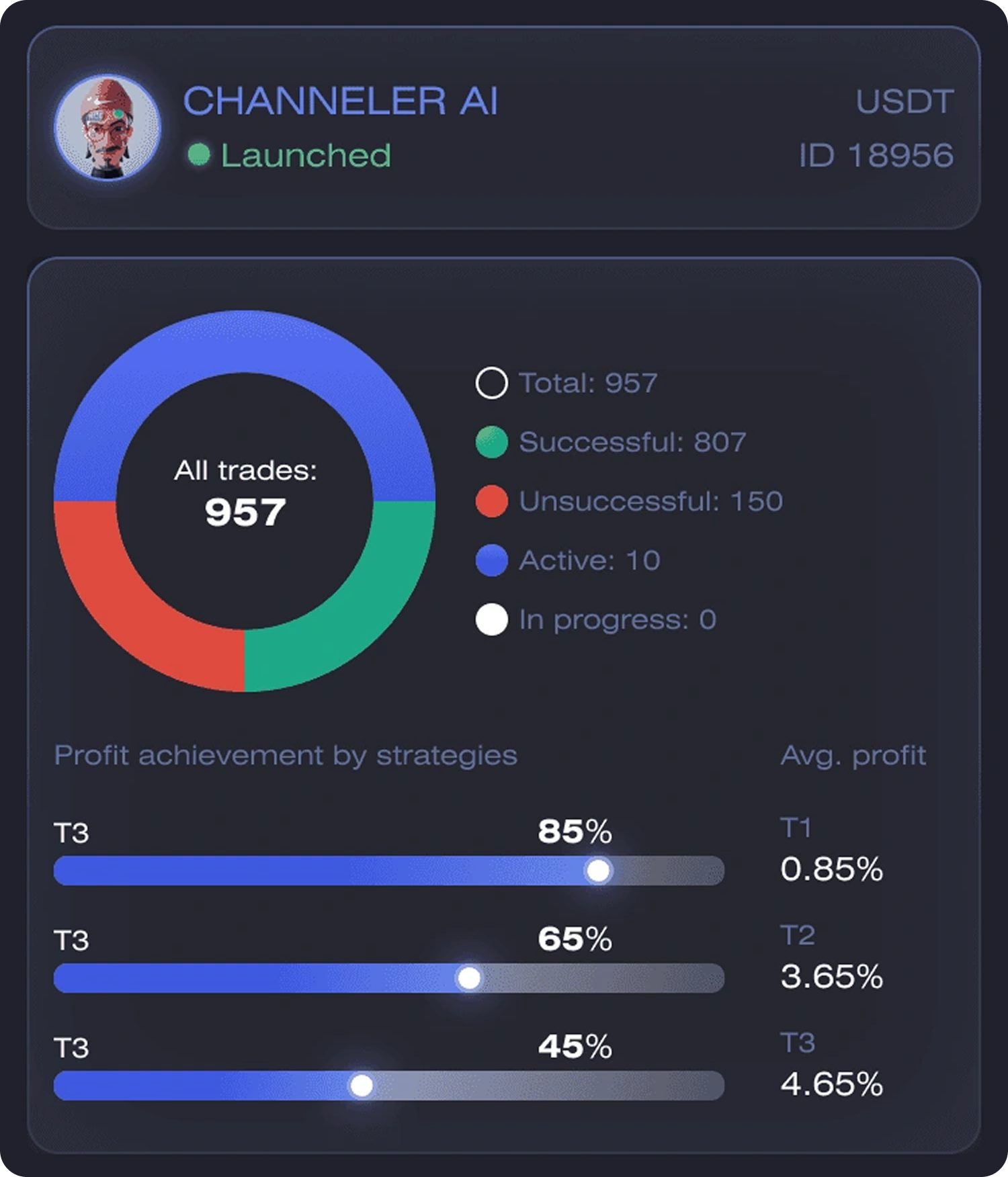
The donut chart gives the trading summary in one pass, without digging into individual trades
The result of a long partnership
Advanced capability stayed exactly where it was, and the first hour stopped scaring people off. The entrance, the phone and the monetization each ended up measurably better than where they started
Conversion to subscription up, support load on automated tools down, and a mobile audience large enough to plan around rather than accommodate
A first working bot within minutes of signing up, on a virtual balance. The product proves itself before any real funds or subscription
One set of rules across a platform that had grown for years, so new features stop arriving in whatever style their sprint happened to have
What we did
Product strategy & logic
Defined the core scenarios, product rules and release priorities with the founding team
Structure & visual language
Rebuilt navigation, screen behaviour and styling around proven workflows
Analytics & activation
Used funnel evidence to remove friction, test a safe onboarding flow and shorten the path to a first result
Working from a phone
Reworked sign-up, trading and bot monitoring so they are comfortable to use on the move