From trading platform to white-label builder
A crypto platform running bots, signals and smart trading for its own users. We built a builder on top of it: a partner picks a domain, a brand and instruments and assembles their own platform in six steps on infrastructure that was already built
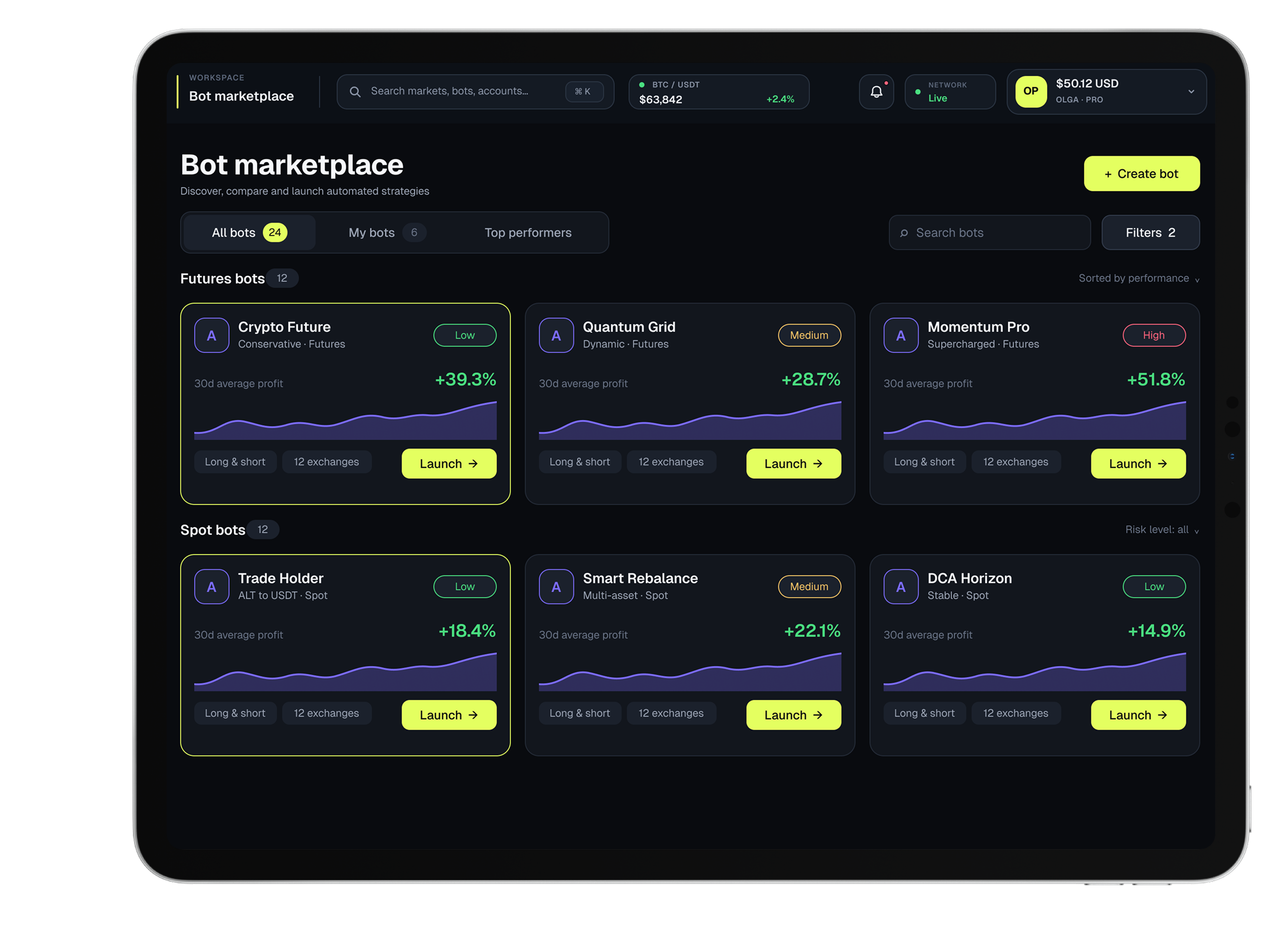
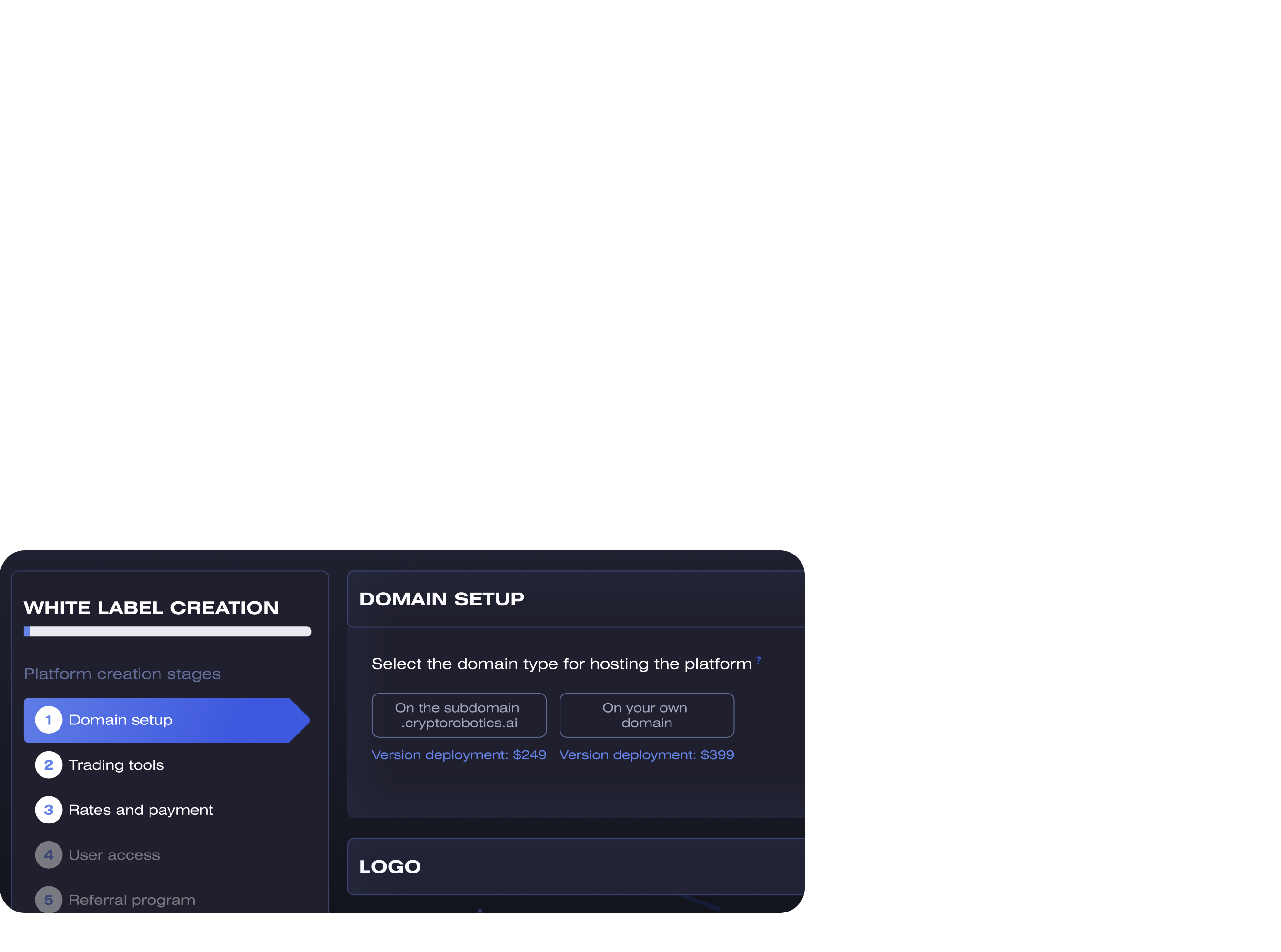
Research, the business model, the wizard and the operator panel
Taken apart before a screen was drawn
The market benchmark is 4–12 weeks
Plus end users arriving through partners, with no direct paid media spend
Automated bots, signal bots, signal channels and manual smart trading. Non-custodial: every user connects their own exchange API key, so the platform never holds money
A ready platform under their own brand, with powerful trading features and no months of development. For bloggers and communities with a loyal audience but no product of their own
Nobody sold the automation layer on its own
Fourteen platforms taken apart. Some sell a subscription to bots, others sell white label. We looked at what it costs and what the buyer actually gets
- Sells
- A subscription to one brand, $15–150 a month
- Dead end
- You can advertise it. You can never own it
- Sells
- The whole exchange: engine, order book, custody. $15–60K, 4–12 weeks
- Dead end
- The operator holds customer money, which brings custody and licensing obligations
White-label vendors sold the whole exchange, but not the trading automation itself. That became our product
Those products include much more: an exchange engine, liquidity, custody and licensing. Here, users keep funds on their own exchange accounts, so the partner never holds other people's money
A whole platform you can launch on your own
At $249, any manual setup eats the profit. So no step in the wizard needs a human: six steps, each resumable
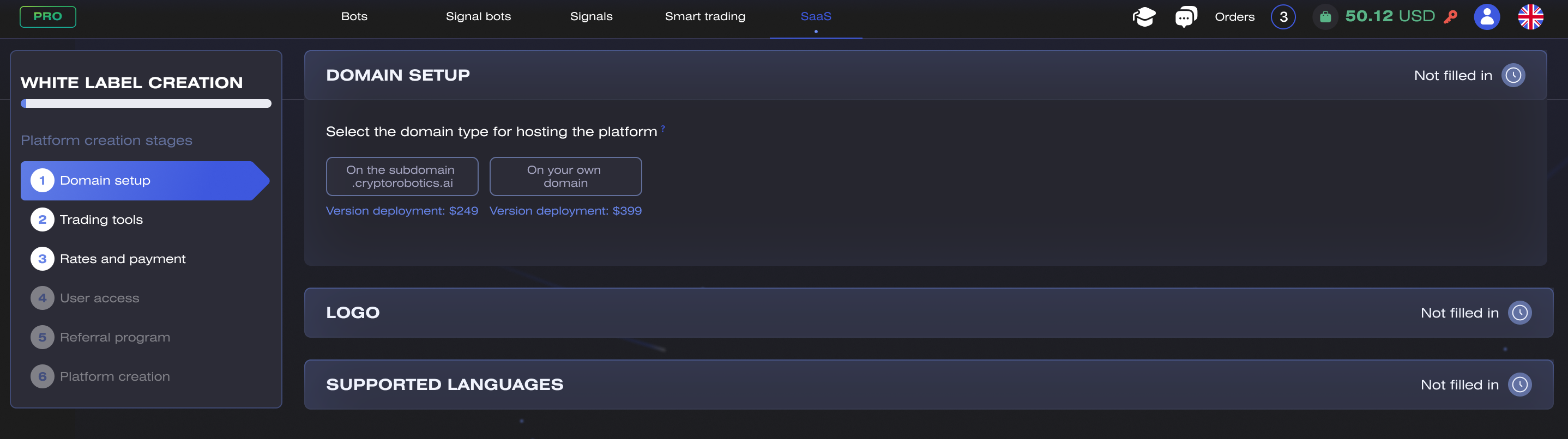
Each stage carries its own status, so a partner fills in what they know and comes back to where they stopped. Step one is already a pricing decision, stated before the first field is filled
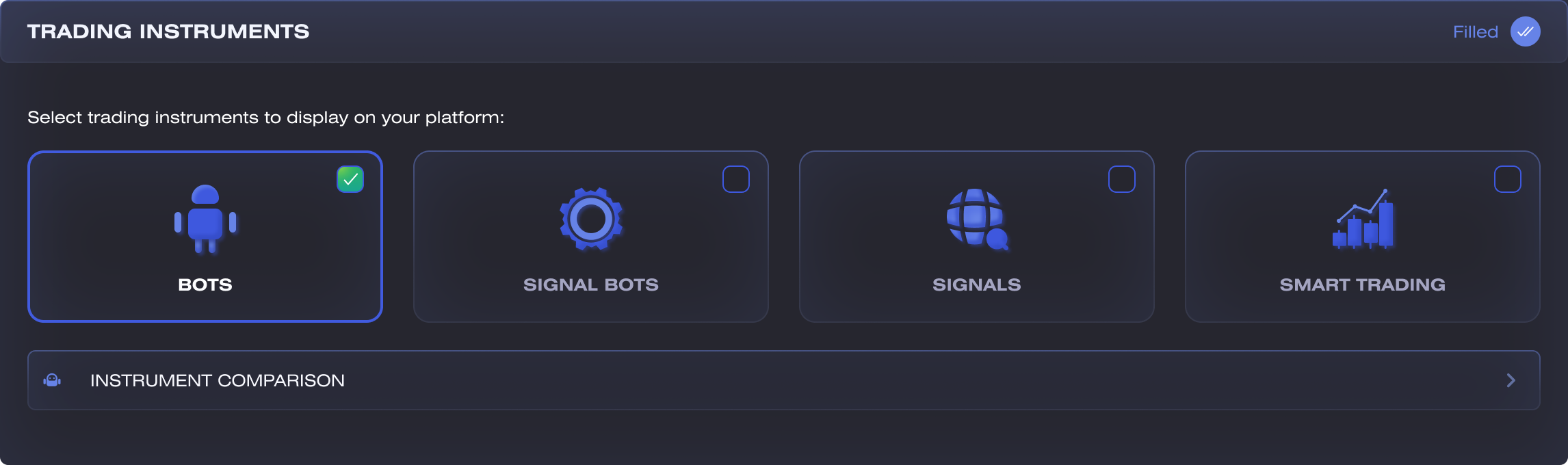
A signal-channel owner ships a platform that is only signals and adds bots when ready. Partners can launch with only the tools they need and expand the offer later
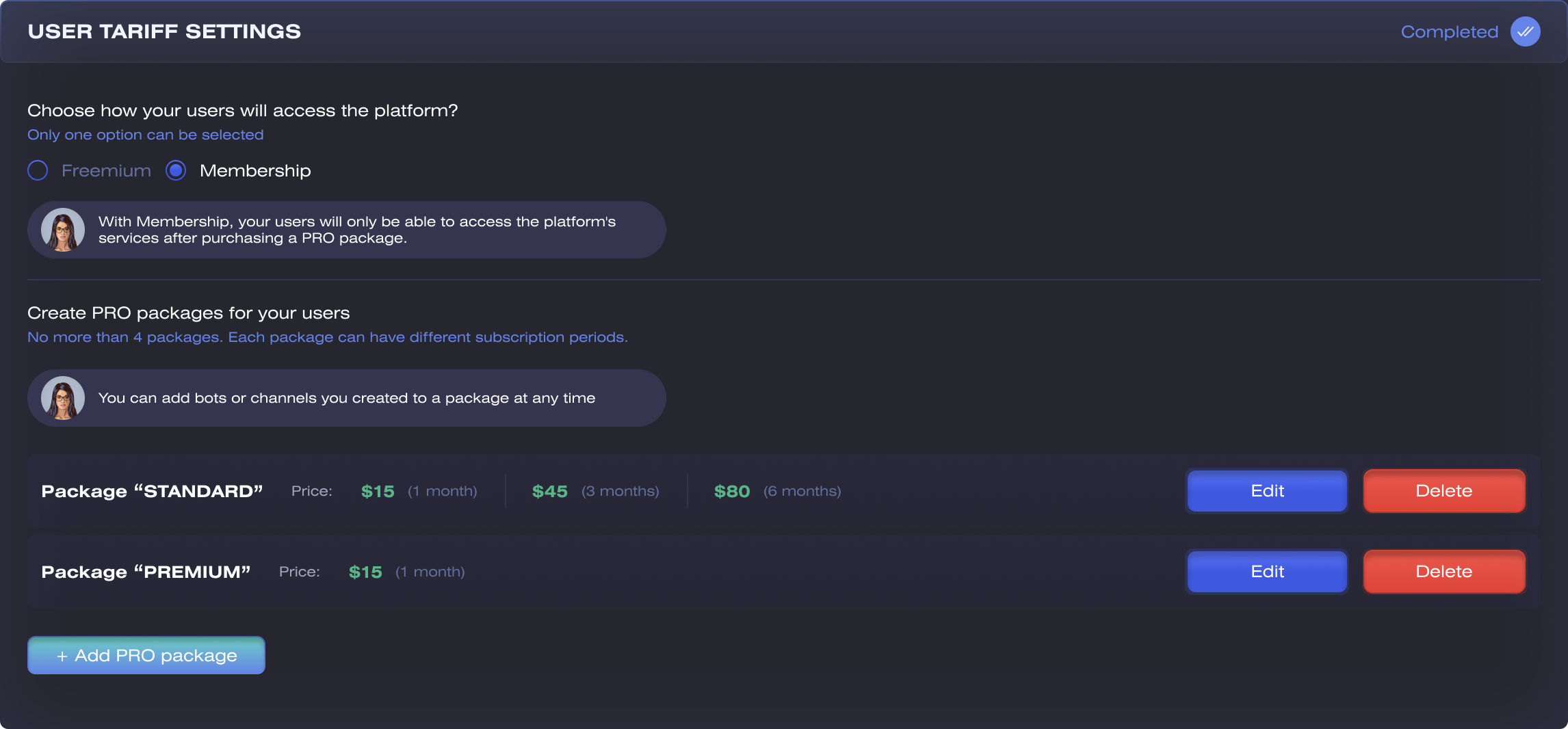
Free or paid access: that decides what the platform becomes. Default prices sit in the $15–150 band, and a partner can drop their own bots and signal channels into any package
The screen a partner runs the business from
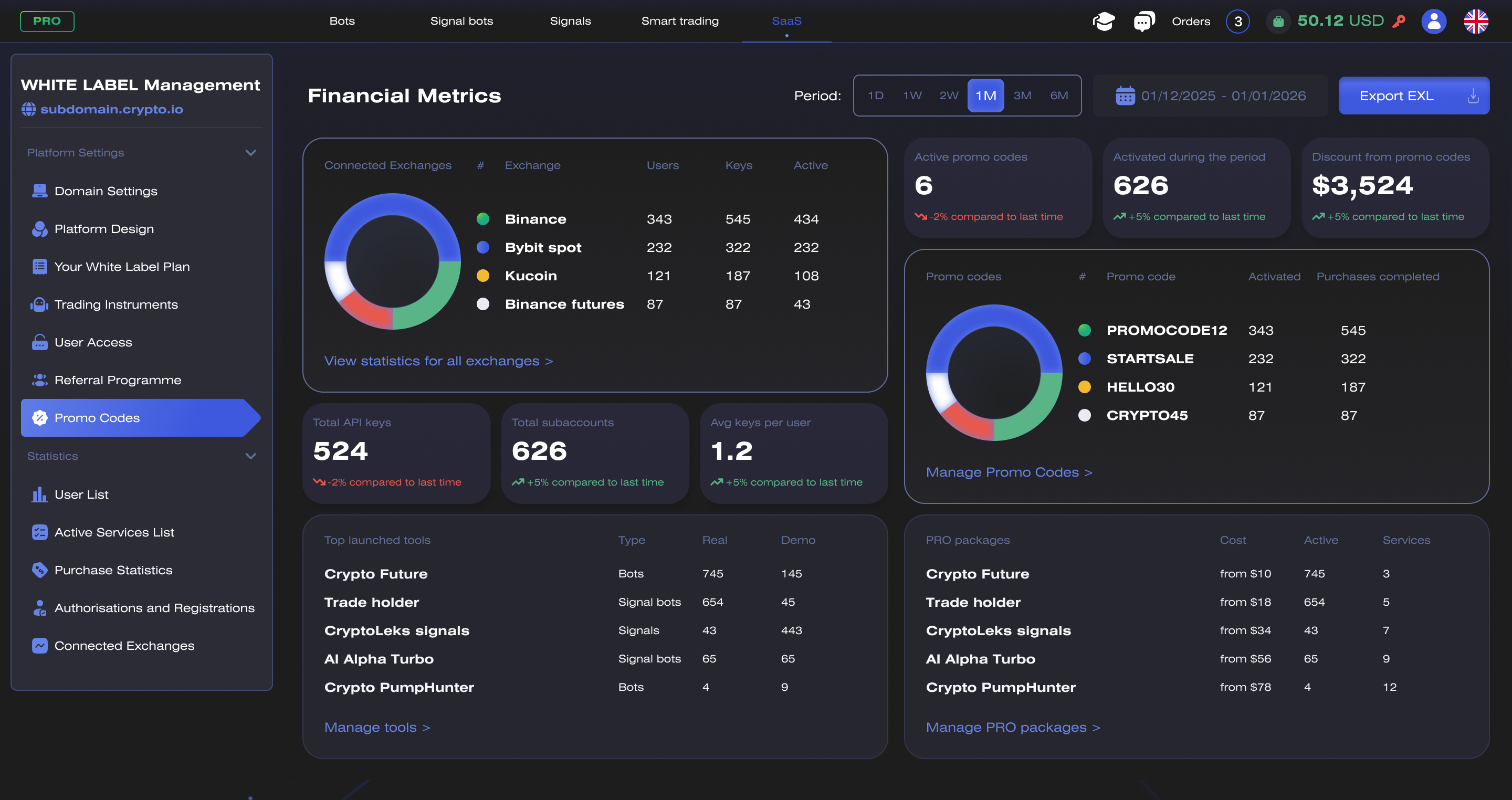
After launch the work begins: seeing what sells, who returns and which promos work. It all sits on one screen, and reports export for investors and analysis
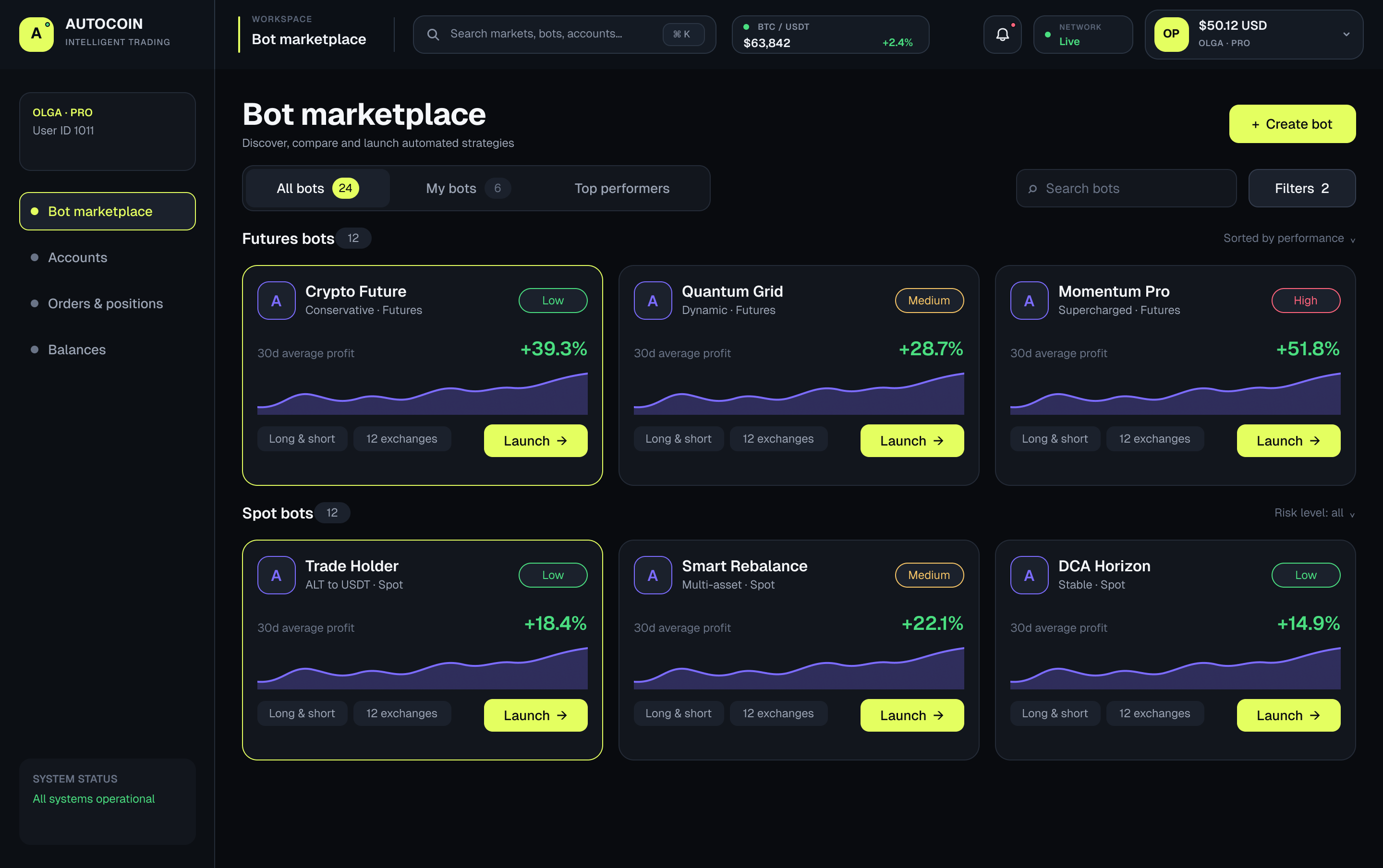
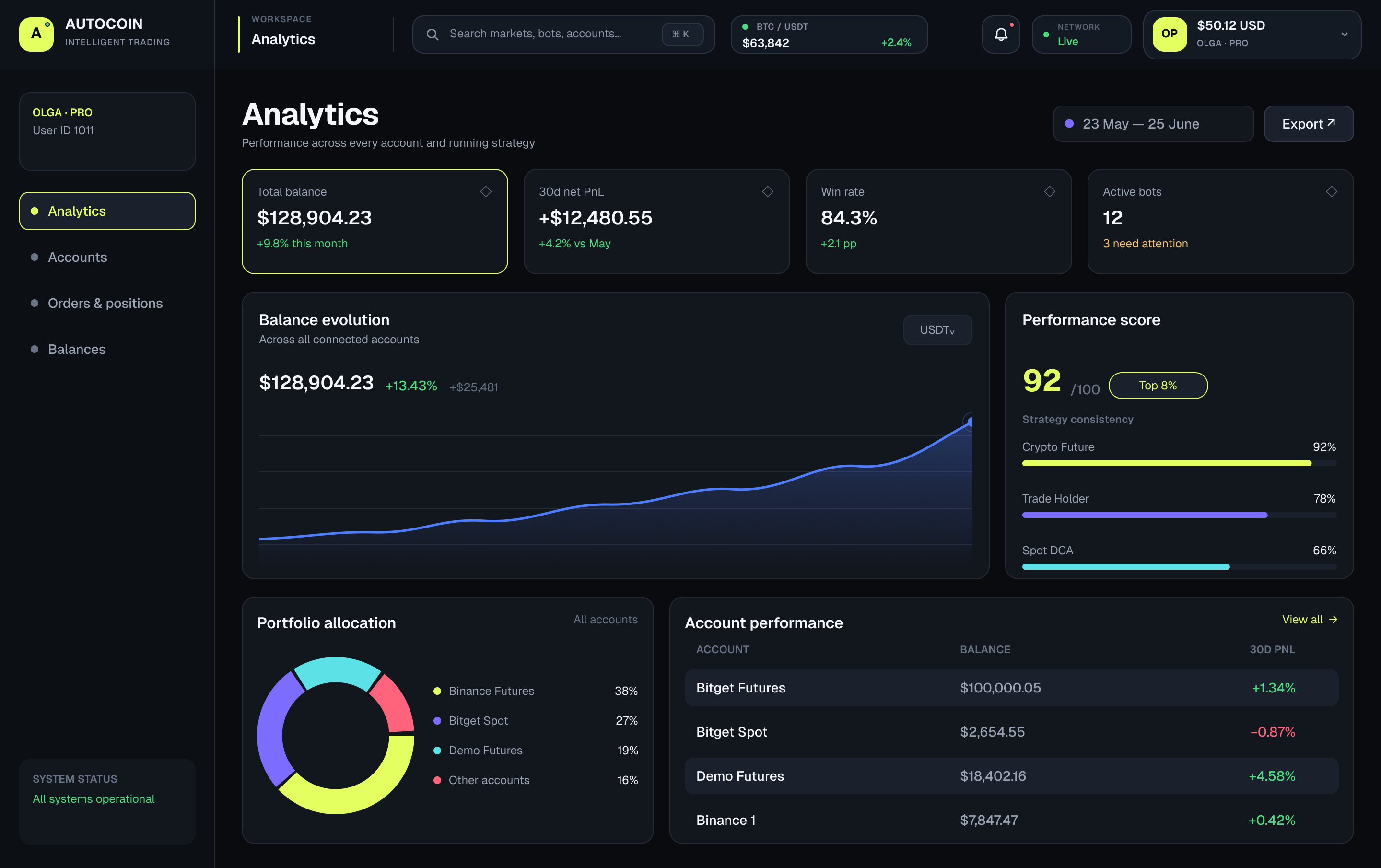
Launched under their own brand
Logo, palette, naming, domain, instruments and prices are all set by the partner in the six stages above. What goes live is their product, not a co-branded page on somebody else's
Drag sideways
Logo, palette, naming and domain, set in the wizard and applied across every screen
The instruments they chose, described the way their audience already talks about them
Everyone connects their own exchange key, so the partner never holds client assets
Easy to manage
Every screen is self-explanatory
Subdomain or their own, with the fee stated up front
Logo, palette and naming, so the product reads as theirs
Bots, signal bots, signals and smart trading, one at a time
Which venues appear, and whether demo trading is offered
Free or paid access, and the PRO packages under it
Crypto or card, each with its settlement schedule
The partner's own affiliate layer, one level down
What sold, at what price, on which package
Who signed up, who authorized, who came back
The platform earns from partners
Infrastructure already paid for now earns revenue, brings in users and grows on partner requests
Partners pay to launch, then every month. The engine, integrations and billing are already built
Every platform brings its own audience onto the same engine, through someone they already trust
Partners request new features, and they land in the core product
What we actually did
Market & competitor research
Fourteen platforms: subscription bots for the price band, white-label vendors for what the buyer actually gets. The pricing and the non-custodial positioning both came out of it
Business-model design
Free against paid access, packages, promo and referral mechanics, settlement schedules, designed as screens, because that is the only place a partner meets the model
Self-serve launch
A six-stage wizard with resumable state, so a platform launches without anyone's help and partner growth does not require proportional growth in manual support
Operator product
The dashboard, statistics and growth tools a partner needs once the platform is live and the day-to-day work begins